Raising Meat Birds on Your Homestead
Raising meat birds is one of the most efficient ways to put high-quality protein in your freezer. With a relatively short time commitment – anywhere from six weeks to a few months – you can raise healthy, humanely cared-for birds and know exactly how your food was produced. Whether you’re brand new to poultry or looking to refine your system, meat birds are a rewarding addition to any homestead.
Why Raise Meat Birds?
Meat birds grow quickly, require minimal spaces compared to larger livestock, and can be raised on pasture to improve both bird health and soil fertility. For many homesteaders, they offer the perfect balance between sustainability and practicality – turning feed, forage, and good management into nutrient-dense food for the family.
Housing Your Meat Birds
Housing is largely dependent on the season and your overall setup, but simplicity often works best.
Summer Housing
In warmer months, hoop coops are a popular and effective option. They’re affordable, easy to build, and provide excellent ventilation. A basic hoop coop can be constructed using:
- Cattle panels
- 2″x4″ lumber
- Hardware cloth
- Fence staples
Adding wheels to one end and handles to the other allows you to move the coop easily. This not only helps with pasture rotation but also spreads manure evenly, fertilizing your land as you go.
Fall and Winter Housing
In colder seasons, protection from wind, moisture and extreme temperatures becomes critical. Options include:
- Converting a stall or shed
- Using a covered and insulated hoop coop
- Adding deep bedding for warmth and moisture control
Regardless of the season, good airflow without drafts, dry bedding, and predator protection are non-negotiables.
Choosing the Right Birds
Your choice of bird will shape your entire experience – from feeding costs to processing day.
Cornish Cross
The most common meat bird for a reason, Cornish Cross are incredibly efficient and fast-growing.
- Ready to process in 6-8 weeks
- Large breast meat and excellent feed conversion
- Can grow very large very fast
While they’re not the most pleasant birds to raise and require careful feed management, they are unmatched for efficiency.
Freedom Rangers
A solid alternative for those who value foraging ability and flavor.
- Processing age is 9-11 weeks
- Smaller carcass size
- Excellent pasture performance and richer flavor
Dual-Purpose & Heritage Breeds
If you’re looking for birds that offer both meat and eggs – or prefer slower-growing, hardier breeds – dual-purpose chickens are worth considering.
Breese
- Mature around 16 weeks
- Process at 3-5lbs
- Lay ~250 eggs/year
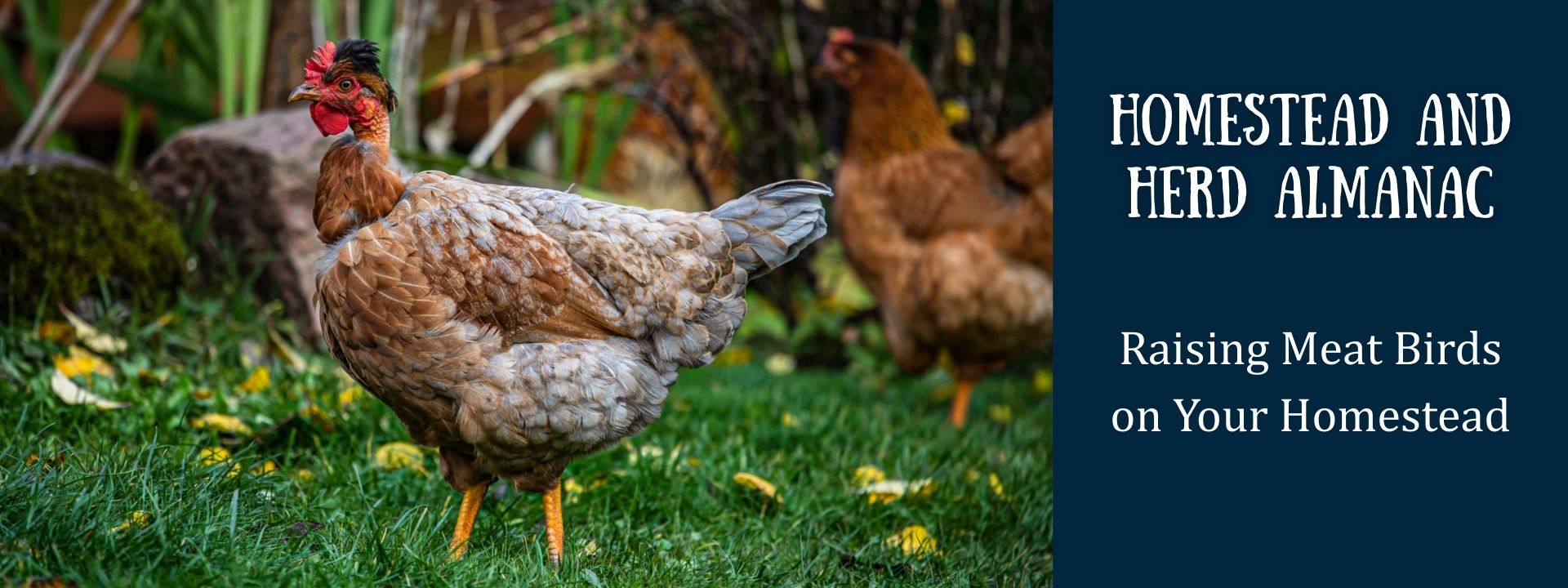
Turkens (Naked Necks)
- Mature around 20 weeks
- Cold tolerant and excellent foragers
- Fewer feathers make processing easier
- Docile temperament
Jersey Giants
- Mature around 20 weeks
- Process at 8-11lbs
- Lay 150-200 eggs/year
Orpingtons – Heritage Breed
- Mature at 20-22 weeks
- Process around 4lbs
- Cold-hardy, docile, great foragers
- Lay ~250 eggs annually
Delawares – Heritage Breed
- Mature at 16-20 weeks
- Process at 6-8lbs
- Strong egg production and balanced meat yield
While these breeds take longer to raise, many homesteaders appreciate their resilience, flavor, and long-term productivity.
Feeding Your Meat Birds
Proper nutrition is key to healthy growth and efficient feed use.
Feeding Program
- Cornish Cross:
We recommend feeding Kaniksu Feeds Chick Starter for the first 4 weeks, then transitioning to Poultry Grower until processing.
- Dual-Purpose Breeds:
We recommend feeding Chick Starter for 8 weeks, then transitioning to Poultry Grower.
Offering feed ad libitum allows birds to grow to their full potential. However, Cornish Cross birds may require additional management as they age and grow.
Managing Feed Intake
Because Cornish Cross birds grow so rapidly, they can overeat, leading to health issues.
- A 12-hour on/ 12-hour off feeding schedule can help
- Monitor mobility and behavior closely
- Fresh water should always be available
Supplementing with pasture, kitchen scraps, and appropriate treats can support overall health but should never replace a balanced ration.
Butchering & Processing
Cornish Cross birds are typically ready for processing around week 8, though timing can vary depending on desired size.
Basic Processing Steps
- Dispatch using a kill cone for safe, humane handling
- Allow birds to bleed out fully
- Scald in 140°-150° water for 30-60 seconds
- Hand pluck or use a mechanical plucker
- Remove head, feet, and internal organs
- Chill birds immediately in an ice-water cooler
Allowing carcasses to rest under refrigeration for 24-48 hours before freezing improves tenderness.
Estimating Feed Costs
Feed costs are one of the biggest variables in raising meat birds, but estimating usage helps with budgeting.
General Rule:
Each bird eats about 1/4 lb of feed per day
Calculation
Number of birds × 0.25 = Daily feed (lbs)
Daily feed × Days raised = Total feed required
Total feed ÷ Number of birds = Feed per bird
Example:
50 birds × 0.25 = 12.5lbs/day
12.5lbs × 56 days = ~700lbs total feed
≈ 14lbs of feed per bird
This simple math can help you plan purchases and avoid running short.
Raising meat birds is one of the most empowering projects a homesteader can take on. It provides food security, improves land fertility, and connects you directly to your food source. With thoughtful housing, the right breed choice, quality feed, and a clear processing plan, meat birds can become a reliable and rewarding part of your homestead year after year.
Knowing where your food comes from – and how it was raised – is worth every bit of effort.