Forage Pellets vs. Loose Hay: Understanding the Pros, Cons, and Best Uses for Livestock
Forage is the foundation of any herbivore’s diet, and choosing the right form – pellets or loose hay – can make a significant difference in animals health, management efficiency, and feed consistency. Both options have their place, and the best choice often depends on your animals’ needs, your feeding goals, and the conditions you’re working with. Below is a clear, detailed look at how forage pellets compare to traditional loose hay, along with real-life considerations that producers and livestock owners often weigh.
What Are Forage Pellets?
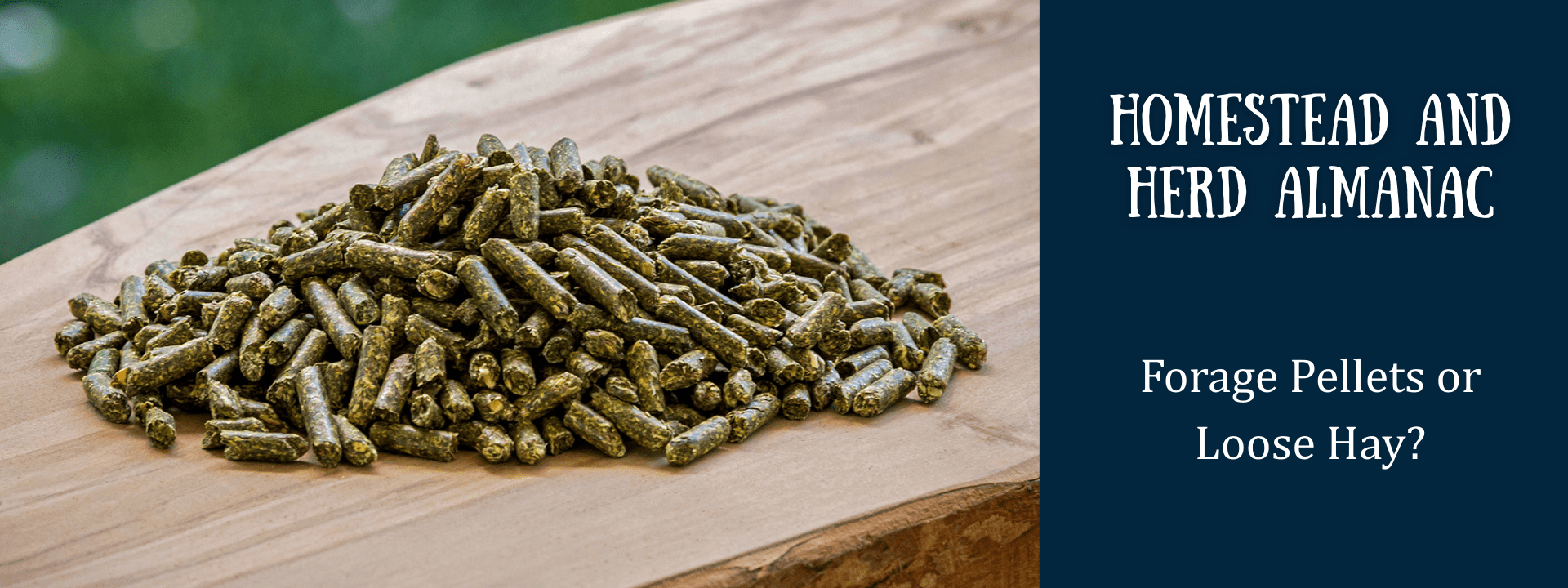
Forage pellets are tightly compressed, ground forages – typically Alfalfa, Timothy, or Grass blends – formed into uniformed pellets. They offer the same nutritional value as the original plant material but in a more compact processed form.
Loose hay, on the other hand, is the traditional full-fiber forage fed in flakes or free-choice. It maintains its natural structure, long stems, and slower chew time.
Key Differences and Considerations
1. Fiber Length & Digestive Health
Loose Hay:
- Long-stem fiber is essential for proper rumen and gut function.
- Ideal for horses, cattle, goats and other ruminants needing maximum chew time and saliva production.
- Helps reduce boredom and maintain natural grazing behavior.
Forage Pellets:
- Provide effective fiber but in shorter pieces.
- Still supportive of gut health, but not a true replacement, unless long-stem forage is unavailable.
Many horse owners rely on pellets during winter storms when hay deliveries are delayed. While they don’t replace the value of long-stem forage completely, pellets keep the digestive system moving and prevent sudden dietary changes.
2. Consistency & Quality Control
Loose Hay:
- Quality can vary bale to bale and even flake to flake based on field conditions, storage, cutting, and weather.
- Dust, mold, and leaf shatter can also be concerns, especially in older or poorly stored hay.
Forage Pellets:
- Highly consistent in nutrition – every bag offers the same protein, fiber, and energy level.
- Minimal dust and almost no waste, making them ideal for sensitive animals.
- Great for owners who like precise, controlled feeding.
3. Storage & Waste
Loose Hay:
- Requires significant storage space – barns, sheds, or tarped areas.
- Can be messy and produces waste from leaves, weeds, and stem refusal.
Forage Pellets:
- Compact bags make storage easier and cleaner.
- Nearly zero waste since animals consume pellets completely.
- Perfect for small farms, boarding barns, or anyone short on storage space.
4. Feeding Management & Special Needs Animals
Loose Hay:
- Best for easy keepers and animals with normal dentition and appetite.
- Encourages natural eating patterns.
Forage Pellets:
- A lifesaver for older animals with poor teeth who struggle to chew long fibers.
- Can be soaked to make a soft mash – ideal for senior horses, rescues, or animals recovering from illness.
- Also helpful for animals needing precise diet control, such as metabolic horses or performance livestock.
Senior horses that lose weight on hay alone often thrive on soaked alfalfa pellets because they can consume adequate calories without the challenge of chewing long stems.
5. Cost Considerations
Loose Hay:
- Can be more affordable depending on local availability and growing seasons.
- But waste, storage loss, and inconsistent quality can offset savings.
Forage Pellets:
- Slightly more expensive per pound of forage.
- However, the lack of waste and nutritional consistency can make costs comparable in the long run.
When Forage Pellets Are the Better Fit
- During hay shortages or winter storms
- For senior animals or those with dental issues
- When precise nutrition is needed
- If storage space is limited
- For reducing hay waste
- For mixing with supplements, grains, or medications
When Loose Hay is the Better Fit
- To support natural chewing and behavior
- For offering long-stem fiber essential for rumen function
- For animals that need slow, continuous forage intake
- When high-quality hay is readily readily available and affordable
Both forage pellets and loose hay have a valuable place in livestock nutrition. Loose hay supports natural behavior and digestive needs, while forage pellets offer convenience, consistency, and a reliable backup when hay supplies fluctuate. Many owners find that using both – hay as the primary forage and pellets as a controlled supplement – strikes the perfect balance.