Fly Season on the Homestead: Building a Smarter, More Resilient Herd Management Plan
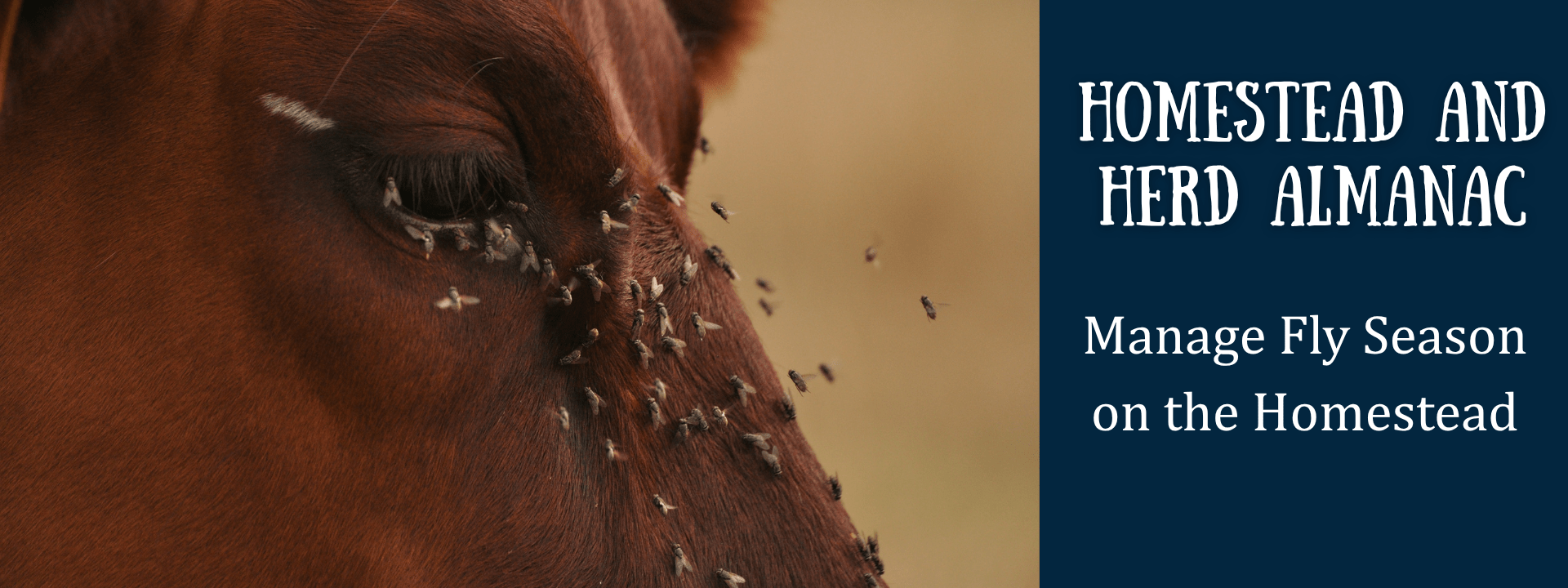
Fly season has a way of creeping up quickly, and once populations explode, it can feel like a constant battle. On many homesteads and ranches, the difference between a stressful summer and a manageable one comes down to preparation, consistency, and understanding how flies actually impact livestock. What often gets overlooked is just how costly flies can be – not just in irritation, but in lost performance, animal health challenges, and time spent reacting instead of preventing.
Years of hands-on livestock management across varied conditions have shown one consistent truth: fly control works best when it’s approached as a system, not a single solution.
The Hidden Cost of Flies
Flies are more than a seasonal annoyance. They directly affect how cattle and small ruminants eat, move, and rest. Increased fly pressure leads to:
- Reduced grazing time due to bunching and avoidance behavior
- Elevated stress levels, which impact immune function
- Lower weight gains and decreased milk production
- Greater risk of disease transmission, especially eye infections
In real-world settings, herds under heavy fly pressure often show uneven grazing patterns. Instead of spreading out and utilizing pasture efficiently, animals cluster together in tight groups, typically near water or shaded areas. Over time, this leads to overgrazed patches, underutilized forage, and overall pasture inefficiency.
Garlic as a Foundational Tool
One increasingly common addition to fly management programs is garlic supplementation. When consumed, garlic releases a compound called allicin, which is excreted through the skin. This creates a natural deterrent effect that many biting and nuisance insects avoid.
Operations that have incorporated garlic into mineral or feed programs often notice a subtle but meaningful reduction in fly pressure, especially when started early. Timing plays a critical role – introducing garlic about 30 days before flies emerge allows it to build up in the animal’s system. Continuing through the season and tapering off about a month after peak fly pressure helps maintain consistent protection.
Beyond fly control, garlic has shown potential benefits that extend into overall herd performance:
- Supporting internal parasite management by lowering fecal egg counts
- Improving feed efficiency in some ruminant systems
- Enhancing meat and milk quality, particularly with beneficial fatty acid profiles
- Influencing rumen activity in ways that may reduce methane output
While garlic alone won’t eliminate flies, it consistently proves to be a valuable piece of a broader strategy – especially for operations looking to incorporate more natural inputs.
Understanding Fly Behavior Changes Everything
Different fly species require different approaches. Misidentifying the problem often leads to frustration and wasted effort.
Horn Flies: The Constant Irritator
Horn flies spend nearly their entire lifecycle on the animal, feeding on blood multiple times per day. They’re typically found along the back, sides, and poll, shifting to the belly during hotter parts of the day.
In pastures where horn flies are left unmanaged, cattle often appear restless and distracted. Studies and field observations consistently show improved weight gains when these flies are controlled – sometimes by as much as 10-20 pounds at weaning.
Once populations reach around 200 flies per animal, economic losses begin to outweigh treatment costs.
Face Flies: The Disease Risk
Face flies behave differently. They don’t bite but instead feed on secretions around the eyes and muzzle. This makes them a primary vector for diseases like pinkeye.
Pastures with shade, water, and higher moisture levels tend to see heavier face fly pressure, especially later in the summer. One of the more frustrating aspects of managing face flies is that they spend much of their times off the animal, making treatment more challenging.
Operations that struggle with recurring pinkeye often find that improving fly control – combined with veterinarian guidance – makes a significant difference year over year.
Stable Flies: The Grazing Disruptor
Stable flies target the legs and are aggressive feeders. Cattle dealing with stable flies will stomp, bunch tightly, or stand in water for relief. These behaviors significantly reduce grazing time and energy efficiency.
Weight gain losses of a few tenths of a pound per day may not seem like much, but over a full grazing season, the impact becomes substantial.
Unlike other flies, stable flies are closely tied to environmental conditions. Wet hay, manure buildup, and decaying organic matter create ideal breeding grounds. Cleaning and managing these areas often produces more noticeable results than chemical control alone.
Layering Control Methods for Real Results
Experience across different herd sizes and management styles consistently shows that relying on a single method rarely delivers lasting control. Instead, combining multiple approaches – each targeting a different stage of the fly lifecycle – creates a more effective and sustainable system.
Feed-Through Fly Control
Oral larvicides and insect growth regulators work by passing through the animal and disrupting fly development in manure. This approach reduces future populations rather than just reacting to current ones.
Consistency is key. Gaps in intake can allow fly populations to rebound quickly.
Pour-Ons and Sprays
Topical treatments provide quick knockdown during peak pressure. They’re especially useful when fly numbers spike suddenly.
However, their effectiveness is temporary, and over-reliance can lead to resistance issues. Rotating active ingredients and integrating other methods helps maintain long-term effectiveness.
Fly Tags
Fly tags offer a convenient way to distribute insecticide across the animals. Proper timing and management make a big difference:
- Apply tags when fly populations begin to build, not too early
- Focus on mature animals and weaned calves
- Remove tags at the end of the season
- Rotate chemical classes each year to prevent resistance
Operations that skip rotation often notice declining effectiveness over time.
Dust Bags and Oilers
These tools are often underrated but can be highly effective when used correctly. Placement is everything. When positioned in areas cattle must pass through – such as near minerals or water – they become a reliable, low-labor solution.
When left as optional (free-choice), usage tends to drop, and effectiveness can be cut nearly in half. Forced-use setups consistently deliver better results.
Environmental Management: The Game Changer
Across nearly every successful fly control program, one factor stands out – attention to the environment.
Manure management, moisture control, and sanitation often determine whether a program succeeds or struggles. Breaking up manure pats, dragging pastures, and cleaning up leftover feed all reduce breeding sites.
Winter feeding areas deserve special attention. These locations frequently become hotspots for fly development in the spring if not properly managed.
Simple changes – like spreading manure to dry or removing wet organic matter – an dramatically reduce fly populations before they ever reach the animal.
Bringing It All Together
Effective fly control isn’t about eliminating every insect – it’s about reducing pressure to a level where animals can perform normally and stay healthy.
The most successful approaches share a few common traits:
- Early preparation before fly season begins
- Consistent application of chosen methods
- A combination of internal, external, and environmental controls
- Willingness to adjust based on conditions and fly pressure
Over time, these practices not only reduce fly populations but also improve pasture use, animal comfort, and overall herd productivity.
Fly season may be inevitable, but being unprepared doesn’t have to be.