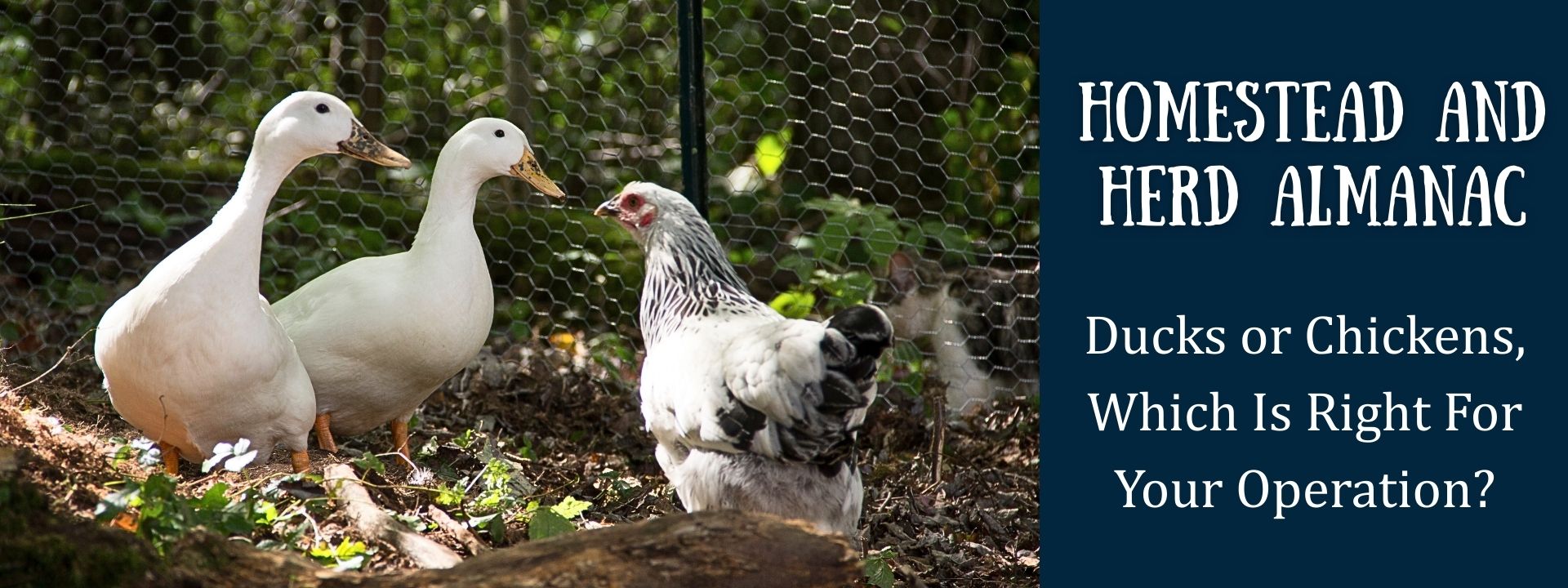
Ducks or Chickens - Which is the Right Choice for You?
When you’re building a homestead, every animal has a purpose. Eggs, meat, pest control, soil health, even companionship – it all matters. So, when it comes to choosing between ducks and chickens, the “right” answer depends less on what’s popular and more on how you live, your land, and what kind of chores you’re willing to take on.
Both birds can fill your egg basket and bring life to your yard. But they go about it in very different ways.
Egg Production
If eggs are your main goal, both ducks and chickens can deliver.
High-producing chicken breeds like Leghorns and ISA Browns can lay up to 300 eggs per year. Ducks like Khaki Campbells and Indian Runners can match that production.
The difference shows up in timing and longevity:
- Chickens usually start laying around 4-5 months old.
- Ducks start a little bit later, around 6-7 months.
- Ducks often remain productive for more years than chickens.
- Duck eggs are about 30% larger than chicken eggs.
Some duck breeds lay year-round, and ducks are generally less sensitive to changes in daylight. That means steadier production even when natural light is limited.
If you want bigger eggs and longer laying years, ducks might edge ahead. If you want earlier production, chickens win that round.
Housing and Living Style
Both ducks and chickens can be confined or free-ranged, but they handle each setup differently.
Confinement
Chickens adapt better to confinement, which makes them ideal for small backyard setups. That said, they’re more prone to boredom and bullying in tight quarters. Breed selection matters – some tolerate confinement better than others.
Ducks are messier in confinement. They require access to water, and that water quickly turns into mud. Keeping ducks confined takes more cleaning and more bedding.
If space is tight and you need tidy, chickens are usually easier.
Free-Ranging
Ducks thrive when they can roam. They’ll happily forage a large portion of their diet and are excellent grazers.
Here’s something many homesteaders love:
- Ducks are less destructive than chickens
- Chickens scratch and dig, often tearing up pasture and exposing roots
- Ducks mostly graze and only dig small holes while hunting bugs
- Ducks are superior pest control, especially for slugs and insects
If you care about preserving pasture or landscaping, ducks are gentler on the land.
Even when free-ranging, both species need secure housing at night for predator protection.
Predators
Both birds attract predators.
Chickens can sometimes fly up out of reach or run faster than a duck can waddle. Ducks, especially heavier domestic breeds, are more vulnerable to ground predators because many can’t fly well.
However, if ducks have access to water, they’ll often head there for safety.
If predators are a heavy concern in your area and you don’t have a pond or water feature, chickens may have a slight advantage.
Maintenance and Management
Coop vs. Duck House
Chickens roost on bars and lay eggs in nesting boxes. You’ll need to coop train them when they’re young – guiding them inside each evening until they learn the routine.
Ducks don’t roost. They nest in bedding and lay eggs in ground nests inside their duck house. No roost bars required! Just plenty of clean bedding.
One key rule with ducks:
Keep water outside the duck house – otherwise you’ll have a swamp.
Bedding and Cleaning
Ducks have wetter droppings and require highly absorbent bedding. Expect more frequent clean-outs.
Chickens produce drier manure, and their coops can be outfitted with dropping boards or slings to simplify cleaning.
If you prefer lower daily mess, chickens are easier to manage.
Training and Handling
Chickens must be trained to return to the coop. Treats and consistent routines help tremendously.
Ducks are generally easier to hers and control. They’re less flighty and easier to guide back into their house at night. Training them to come when called or when they hear a feed can shaking saves time and patience.
If ease of handling matters, ducks are often simpler.
Fencing and Space
Chickens are surprisingly good flyers. Fencing needs to be taller, and sometimes overhead netting is necessary.
Most domestic ducks are poor flyers, so fencing doesn’t need to be nearly as high.
However, ducks require more space overall, largely because they need access to water deep enough to dunk their entire bills – ideally their entire heads – daily to keep nasal passages clean.
If you don’t want to manage water sources, chickens are simpler.
Climate and Environment
Seasonal Temperatures
Chickens are often categorized as cold hardy or heat tolerant, and breed selection matters.
Ducks adapt well to both cold and heat. Most breeds handle temperature swings with fewer issues and continue laying more consistently despite weather fluctuations.
Regional Climate
Chickens prefer dry conditions. Wet environments can harbor harmful bacteria and increase illness.
Ducks thrive in wetter areas. They love water and generally have stronger immune systems in damp climates.
If your homestead sees frequent rain or naturally wet ground, ducks may fit in better.
Diet and Water Needs
Chickens do well on a controlled ration with occasional treats.
Ducks prefer to forage much of their own diet but can eat chicken feed with a few adjustments:
- Slightly higher protein
- Additional niacin
Great supplements include:
- Peas – protein and niacin
- Brewer’s yeast – niacin boost
Both need fresh drinking water daily, but ducks require deeper water to dunk their bills. If you toss in frozen peas or small fish, you’ll see just how much they enjoy their chores.
Health and Hardiness
Chickens are more susceptible to disease and external parasites like lice and mites. They thrive in clean, dry, controlled conditions, and their immune system builds gradually.
Ducks are generally more disease resistant, have stronger immune systems, and are less prone to mites and lice.
If hardiness and lower illness risk are priorities, ducks often come out ahead.
Personality and Noise
Ducks tend to be friendlier toward newcomers and less destructive in the yard. They’re also quieter overall. Female ducks quack, but drakes make a raspy sound that’s much softer.
Larger duck breeds are usually calm and laid back. Smaller ducks can be more skittish.
Chickens vary widely by breed – some are affectionate, others are aloof – and roosters, of course, bring early morning announcements and may help you or your kids build character.
If quiet matters, ducks may surprise you.
So… Which Is Right For You?
Choose chickens if:
- You have limited space
- You need birds that adapt well to confinement
- You prefer a cleaner coop setup
- You don’t want to manage water features
- Early egg production matters
Choose ducks if:
- You have room to free-range
- You want superior pest control
- You live in a wetter climate
- You value disease resistance and hardiness
- You want larger eggs and longer laying years
- You’d like gentler birds on your landscaping
At the end of the day, both ducks and chickens can thrive on a well-run homestead. It comes down to your land, your climate, and the rhythm you want in your daily chores.
Some homesteaders choose one.
Many eventually keep both.
And that might just be the right answer.