
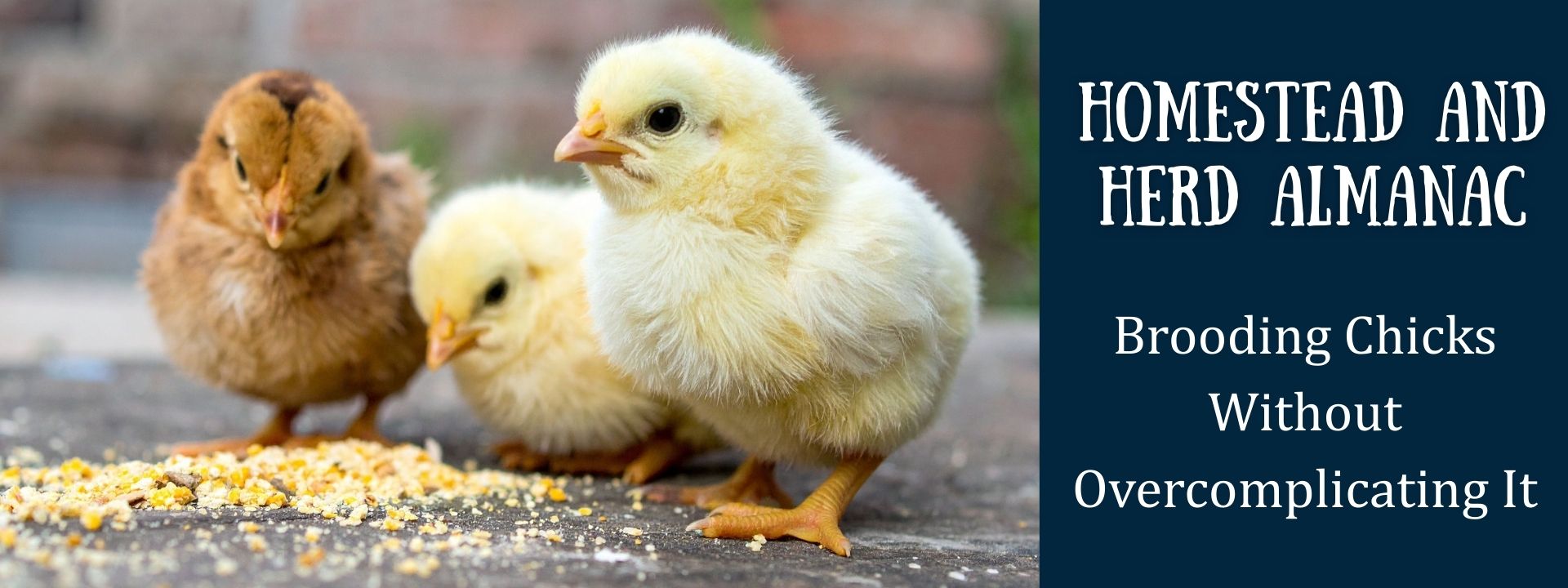
Brooding Chicks - Without Overcomplicating It
Bringing home chicks is one of the most exciting parts of raising poultry – and it doesn’t need to be complicated to be done well. Brooding is simply the time from hatching until birds are no longer in need of supplemental heat. Depending on the size, breed, and species, that window usually falls somewhere between 2 and 8 weeks.
Quail are often ready to move out around 2 weeks (more on Raising Quail here), meat birds around 4 weeks (more on Raising Meat Birds here), and most layer breeds closer to 8 weeks. As a general rule, the smaller and slower-growing the bird, the longer it’ll need the extra warmth and protection.
This early stage matters. Chicks grow fast, can’t regulate their body temperature yet, and are more vulnerable to stress, illness, and mistakes. Without a mother hen, it’s on us to give them a warm, dry, and steady start.
If you keep the basics dialed in, the rest tends to fall into place.
The 7 Basics of Brooding Chicks
Light
Temperature
Ventilation
Bedding
Feed
Water
Mortality
You don’t need fancy equipment or a perfect setup – just attention to these fundamentals.
Light
Light does double duty in the brooder – it provides warmth and visibility. Heat lamps are common and effective, and adjusting the temperature is as simple as raising or lowering the lamp.
One important safety reminder from many hard-learned lessons: never hang a heat lamp by its cord. That’s one of the fastest ways to start a fire. Use a chain or sturdy rope and make sure everything is secure before chicks ever go in.
Temperature
A thermometer at chick level is worth its weight in gold. Start with a center temperature of 95°F for the first week, then drop it by 5°F each week by gradually raising the heat source.
Your chicks will also tell you how you’re doing:
- Piled directly under the lamp? Too cold.
- Hugging the walls? Too hot.
- Spread out, eating, drinking, and napping? Just right.
Watch the birds – they’re better indicators than any chart.
Ventilation
Fresh air matters, even for tiny birds. Good ventilation helps control humidity and keeps ammonia fumes from building up, which can damage young lungs quickly.
That said, don’t overdo it. Drafts will chill chicks faster than almost anything else. Most open-top or wire-lid brooders provide plenty of airflow without fans or extra effort.
Bedding
Clean bedding is one of the simplest ways to keep chicks healthy. Two rules apply here:
- Change it often
- Change it thoroughly
Absorbent bedding is key. Pine shavings and rice hulls work best and help keep moisture under control.
Some common materials are better left out of the brooder:
- Straw doesn’t absorb moisture
- Hardwood shavings can carry mold toxins
- Paper isn’t absorbent and may contain harmful inks
If it smells, it’s past time to change it. If you can smell it, imagine what they are smelling.
Feed
Feeding chicks doesn’t need to be complicated, but it does need to be appropriate for their stage of growth. Chick Starter is formulated specifically for young birds and is higher in protein to support rapid development.
Typical timelines look like:
- Chick Starter for the first 8 weeks (depending on breed and purpose)
- Layers move to Poultry Grower around week 8 or once fully feathered
- Meat birds often transition around week 4
- Layers switch to Mega Layer around week 16
For the first few days, keep feed easy to reach. Trough feeders or mason jar style chick feeders work well – just expect chicks to scratch shavings into them. It’s part of the job.
Water
Clean water is just as important as good feed. During brooding, water should be changed twice a day to limit contamination from bedding, feed, and droppings.
Once a week, scrub or flush waterers with a diluted bleach solution to keep mold and bacteria at bay. Offering electrolytes for the first few days can help chicks recover from shipping stress and get off to a strong start.
Chick Mortality
Even with the best care, a small amount of loss is normal. It’s part of raising livestock. However, high mortality is a sign that something’s off – usually temperature, sanitation, ventilation or nutrition.
Daily observation goes a long way. Catching small problems early can prevent bigger losses later.
Brooder Setup Basics
Always warm your brooder for at least six hours before chicks arrive so temperatures are steady. Place feed and water close to the heat source so chicks don’t have to travel far while they’re still learning.
Common, no-frills brooder options include:
- Plastic kiddie pools
- Large storage bins
- Cardboard rings
- Wooden boxes
- Metal stock tanks
Outdoor brooding takes extra attention to drafts and weather swings. Indoor brooding removes some variables but introduces others – pets, kids, and chick dust included.
Keep It Simple
Good brooding is less about gadgets and more about consistency. Warmth, cleanliness, fresh air, solid nutrition, and a watchful eye will take you a long way. Start simple, trust your observations, and your chicks will reward you with a strong, healthy start.