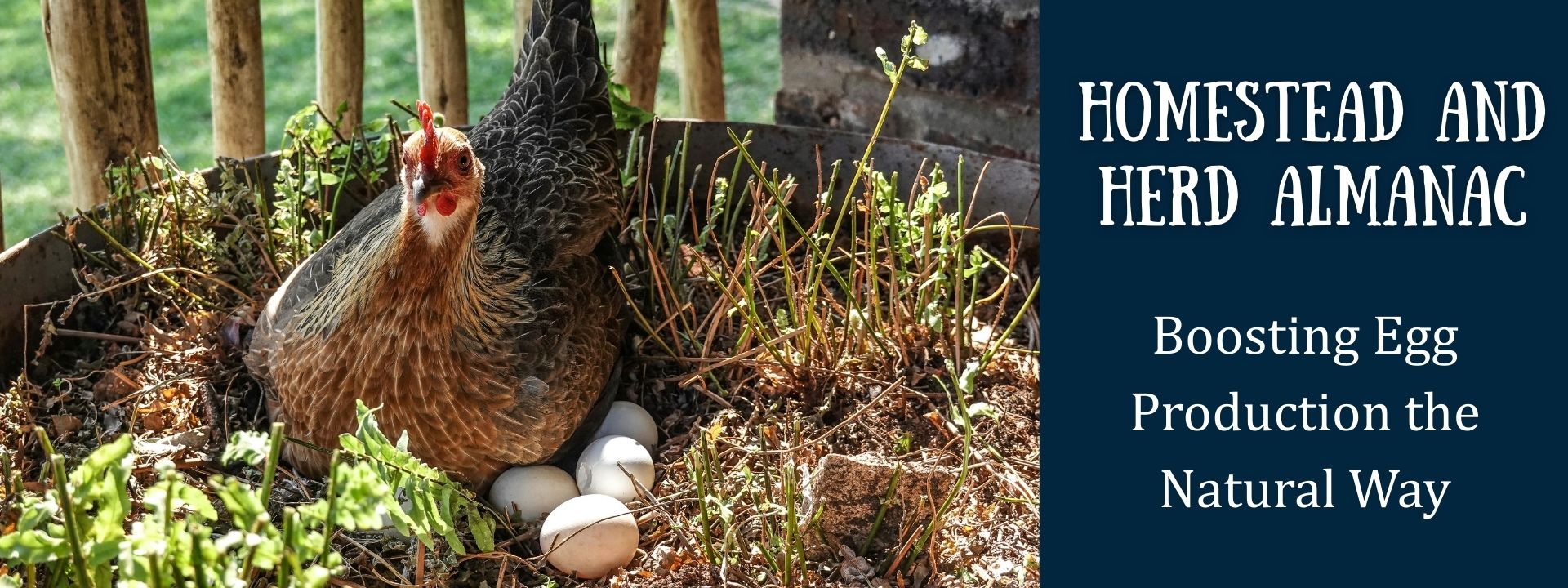
Boosting Egg Production the Natural Way
There’s something deeply satisfying about gathering a basket of fresh eggs each morning. When production slows, it’s tempting to look for quick fixes – but on a homestead, the best results usually come from working with your hens instead of against them.
If you’re hoping to encourage steady egg production naturally, here’s what truly makes the difference.
Start with the Basics: Light and Nature’s Rhythm
Egg laying is closely tied to daylight. Hens generally need about 14-16 hours of light each day to maintain consistent production. As the days shorten in fall and winter, their bodies often respond by slowing down or pausing altogether.
You have two choices:
- Add a low-wattage LED light on a timer to gently extend the morning light.
- Allow your hens to take a natural winter break and resume when spring returns.
Neither approach is wrong. Many homesteaders choose to honor the natural lull, giving their birds a seasonal rest.
Nutrition: The Foundation of Every Egg
A hen cannot produce quality eggs without proper fuel.
- Protein (16-18%) supports strong egg whites and overall health.
- Calcium builds sturdy shells and keeps a hen’s body functioning properly.
Without adequate protein or calcium, production drops quickly. Offer a balanced layer ration and provide free-choice calcium (like oyster shell) to ensure their needs are met.
Water: The Most Overlooked Ingredient
Eggs are mostly water – and a hen’s body is over half water as well. Even mild dehydration can cause production to slow or stop entirely.
Provide fresh, clean water daily. Some flock owners like to add apple cider vinegar (1 tablespoon per gallon) once or twice weekly to support digestion and immune health.
Reduce Stress at All Costs
A stressed hen is not a productive hen.
Common stressors include:
- Predator pressure
- Overcrowding
- Bullying within the flock
- Sudden feed changes
- Illness or injury
Aim for at least 4 square feet per hen inside the coop and one nesting box for every 3-4 hens. A calm, secure flock will always lay more reliably than one constantly on edge.
Let Them Forage
Chickens were designed to scratch, hunt, and explore. Free-ranging (in a safe area) provides:
- Natural protein from insects
- Mental stimulation
- Exercise
- Dietary diversity
If free-ranging isn’t possible, provide enrichment – scatter scratch grains, hang cabbage heads, or rotate coop areas to keep boredom at bay.
Support with Herbs and Natural Additions
Many incorporate herbs into their flocks’ routines to support overall wellness:
- Oregano – Supports respiratory health
- Garlic – Aids digestion and may deter pests
- Parsley – Rich in vitamins A, B, and C
- Lavender – Encourages calm behavior
- Sage – Known for antioxidant properties
- Mint – Helps repel insects and cools birds internally, especially helpful in summertime
- Comfrey – Vitamin-rich and can deepen yolk color
- Calendula – Supports immune health and enhances yolk color
Healthy hens lay better – and herbs are a simple, natural way to support vitality.
Don’t Overlook the Nesting Boxes
Hens are particular about where they lay. Dirty, crowded, or disruptive nesting areas can reduce production or lead to hidden eggs around the yard.
Provide:
- Clean straw or pine shavings
- Quiet, dim nesting areas
- Soft padding
- Ceramic or wooden “dummy” eggs to encourage proper laying spots
A welcoming nest invites a hen to return day after day.
Understand Molting and Seasonal Lulls
Each fall, most hens go through a molt. During this time, their energy shifts from egg production to growing new feathers – and laying often stops completely.
Older hens (two years and older) also begin to slow down naturally. This is normal.
During molting:
- Increase protein slightly
- Minimize stress
- Allow rest
Sometimes the most natural way to boost production is to simply give your flock the time they need to recover.
The Homestead Mindset
Boosting egg production naturally isn’t about pushing hens to their limit. It’s about:
- Proper nutrition
- Clean water
- Safe housing
- Reduced stress
- Respecting seasonal rhythms
When you build your management around these principles, steady egg baskets tend to follow.
And sometimes, the best thing you can do for your flock – and your homestead – is to let nature lead the way.